
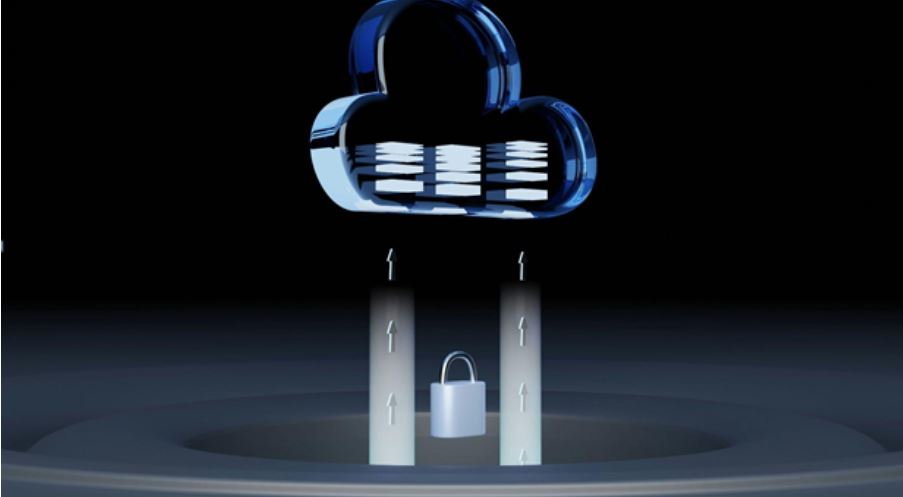
Cloud adoption helps enterprises launch applications faster, scale infrastructure, support distributed teams, and process growing volumes of data. It also increases the number of identities, services, APIs, configurations, vendors, and data flows that security teams must manage. A single excessive permission, exposed database, or unmonitored workload can create a path to sensitive business information.
IBM’s Cost of a Data Breach Report 2025 placed the global average breach cost at USD 4.44 million and the average time required to identify and contain a breach at 241 days. These figures show why enterprises cannot rely solely on security tools or assume that cloud provider controls protect every workload. A regular Cloud Security Assessment helps organizations find weaknesses before they become costly incidents.
What Is a Cloud Security Assessment?
A Cloud Security Assessment is a structured evaluation of an organization’s cloud infrastructure, applications, data, access controls, configurations, policies, and security processes. It determines whether the environment is adequately protected against unauthorized access, data exposure, service disruption, compliance failures, and cyberattacks.
The assessment may cover public, private, hybrid, and multi-cloud environments. It reviews both technical controls and governance because cloud risk rarely comes from one weakness alone. Security depends on how resources are configured, who can access them, where data moves, and how quickly teams respond to suspicious activity.
How Cloud Security Assessment Reduces Enterprise Risk
Here is how cloud security assessment can reduce enterprise risk.
1. Finds Misconfigurations Before Data Is Exposed
Insecure configuration of data storage, databases, networks, security groups, and logs would result in exposure of sensitive information or render the systems connected to the public internet. Through the Cloud Security Assessment, one would identify vulnerabilities such as open ports, unsecured storage, unencrypted databases, disabled logs, overly permissive firewall rules, and use of resources outside allowed zones.
By fixing these vulnerabilities, a better cloud security posture would be achieved, thus minimizing the risk that data would become available due to human mistakes, outdated configurations, or uncontrolled changes in infrastructure.
2. Strengthens Identity and Access Management
Cloud platforms refer to many users, including employees, administrators, service accounts, applications, automated workloads, devices, and third-party vendors. Without a regular audit, it is possible to leave inactive users with access rights, assign unnecessary privileges to accounts, or leave authentication details valid for a long time.
Cloud Security Assessment deals with such aspects as role-based access, multiple methods of operation to access the system, privileges of certain accounts, inactive user identification, key management, and the ability of machines to use the information on behalf of another machine.
3. Protects Sensitive and Regulated Data
Companies keep customer information, employee records, financial data, intellectual property, and operational files in various cloud technologies. Security teams might not have full access to the details regarding the data location, the movement, or the access to it.
The evaluation includes a review of data classification, encryption, key management, backups, retention, deletion, and controls over cross-border storage. It also allows analyzing the existing measures against the corresponding regulations.
This helps companies find the weak points of their system prior to an audit, a search for compliance, or breaches.
4. Detects Vulnerabilities Across Cloud Workloads
Cloud risk does not end with infrastructure configuration. Virtual machines, containers, serverless functions, applications, open-source components, and APIs can create vulnerabilities.
According to the 2025 Data Breach Investigations Report by Verizon, the exploitation of vulnerabilities caused 20% of breaches.
Cloud Security Assessment can involve vulnerability scans, architecture assessments, API security checks, and container analysis that will reveal vulnerabilities for the protection against an attack.
5. Clarifies Shared Responsibility and Vendor Risk
When organizations use cloud services, it does not mean that all responsibility for security falls to the provider, as the latter can only offer security for the physical resources, while the customer takes care of the access of users to systems, data, applications, and the security of operating systems.
Different types of cloud services will have distinct ways of shared responsibility division. A thorough assessment of cloud security assists in determining which parties are responsible for security issues.
6. Improves Threat Detection and Incident Response
Security protocols can have limited meaning if suspicious activity does not get recorded, monitored, and acted upon accordingly.
Assessment aims at checking if the logs of cloud usage are available, stored centrally, secured from unauthorized intervention, and connected to the alerting system. Moreover, assessment allows evaluating the level of alert coverage, escalation, and incident management plans.
The assessment can also reveal whether teams have clear responsibilities during a cloud security incident. This reduces confusion and enables faster decision-making when systems or sensitive data are at risk.
What Does the Cloud Security Assessment Process Include?
The assessment starts with identifying business goals and objectives, cloud environment and architecture, regulatory guideline compliance, and the necessary assets to perform the assessment. Security auditors and assessors are to create a list of identified cloud accounts, workloads, applications, identities, and third parties used in the defense process.
The second phase is aimed at reviewing the architecture and configuration of the system, admission, as well as encryption, network protection, and monitoring processes.
Findings are then grouped by technical severity and business impact. The final assessment report should explain:
- The identified security weakness
- The affected cloud resources
- Its potential business consequences
- Recommended remediation actions
- The responsible owner and priority
Automated security assessments can discover vulnerabilities in the process, while interviews can detect gaps in the designation of responsibility, approval, and security policies.
After correction measures are introduced, validation proves that this time the discovered issues have been successfully fixed and do not pose a threat anymore. This helps in taking timely measures and taking adequate steps before a major risk.
Building Continuous Cloud Security
A Cloud Security Assessment should not be perceived as a one-time compliance check. The measurements should be performed regularly and after every significant cloud migration or acquisition, the start of the business application, building architecture, security incidents, and changes in regulations.
Continuous configuration monitoring and cloud security posture management tools help to identify deviations. CISA guidance also emphasizes maintaining cloud security through ongoing posture management, monitoring, and data-protection practices.
By connecting technical findings with business impact, enterprises can move beyond checklist-based security and build a more resilient cloud governance model. This helps security, technology, and business teams understand which risks require immediate action and which improvements should form part of a long-term cloud security strategy.
However, automation should support rather than replace expert evaluation. Tools may detect a configuration issue, but they may not understand its business context, ownership challenges, regulatory consequences, or relationship with other enterprise systems.
Conclusion
Cloud platforms enable faster innovation, but unmanaged complexity can turn small control gaps into major business risks. A Cloud Security Assessment gives enterprises a clearer view of where sensitive data resides, how access is managed, which resources are exposed, and whether incident-response processes are ready. Hence, cloud security assessment helps in early detection of the small gaps and prevent them from becoming major problems.
More importantly, it turns cloud security from a reactive technical task into a structured business-risk program. Regular assessments help enterprises reduce breach exposure, strengthen compliance, improve operational resilience, and make better security investment decisions.