
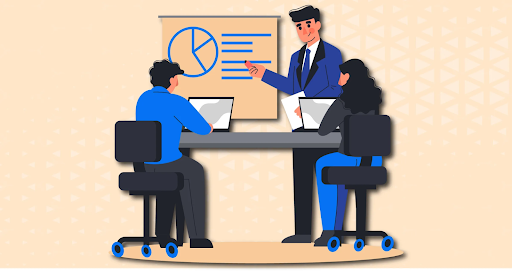
Strong teams grow as people learn together. Learning spaces within organizations facilitate shared thinking and dialogue between people. Corporate training programs for employees in organizations help people understand each other and how they can work together. Through corporate training sessions and discussions, people learn how to listen and share information and thoughts. This eventually helps build a team that works together naturally.
- Shared Learning Builds Common Understanding: Employees might have varying backgrounds and ways of working, but during training sessions, everybody comes together in one place, and the objective is understood. When people learn together, they understand how one role can work with another role, and this leads to smooth conversations, coordination, and unity in the midst of activities.
- Role Clarity Strengthens Team Support: The process can be used to explain their role and process in a simple way. Once they understand the relationship of their role to the people surrounding them, they will begin to appreciate the contribution of each and every person to the team. This makes them motivated to assist one another in sharing useful information in order to achieve the objectives in harmony.
- Practice Sessions Build Trust: Practice activities in the training process involve employees in small groups that work together to achieve a common goal. In this process, employees will see each other’s strengths as they work together and solve different tasks. This helps them develop respect and trust among themselves. Trust helps people work together with ease and comfort and ensures that there is constant teamwork in all activities and interactions.
- Conflict Management Skills: Training programs involve discussions on handling opinions in a balanced way. This means that employees are trained on dialogue, listening, and responding. This way, teams are able to transform opinions into useful ideas. When people engage in dialogue with patience and understanding, collaboration becomes stronger, and relationships at work are steady, supportive, and productive daily.
- Shared Goals Create Team Spirit: During the training sessions, the team project and organizational development are emphasized to the employees by the facilitators. Employees realize the link between their contributions and team success. This helps to develop a robust team spirit in which employees celebrate their success together and support each other. A shared vision helps to foster cooperation and support among employees in all their activities.
- Training Expands Collaboration: Contemporary workplaces have digital learning platforms wherein people from different teams are able to share and learn through virtual workshops and exercises. Digital learning spaces are helping people communicate beyond offices and are facilitating teamwork and collaborations, as the culture of teamwork is becoming stronger every day.
- Continuous Learning Culture Sustains Collaboration: A culture of learning through training programs maintains employees’ association with shared learning and collaborative working styles. Through learning and training programs, people continue to improve and develop communication, coordination, and mutual support and understanding among themselves. This continued learning and training fosters stronger associations among teams and instills collaborative thinking among them for planning and execution of projects.
In conclusion, the process of learning together plays a major role in developing the team’s teamwork spirit. The agentic AI architecture training course, as well as other training courses of today, inspires the team to learn how to collaborate in new ways. Strong teamwork helps people support each other and move forward with confidence. This guides the team toward success and steady professional growth with positive energy every day ahead.