
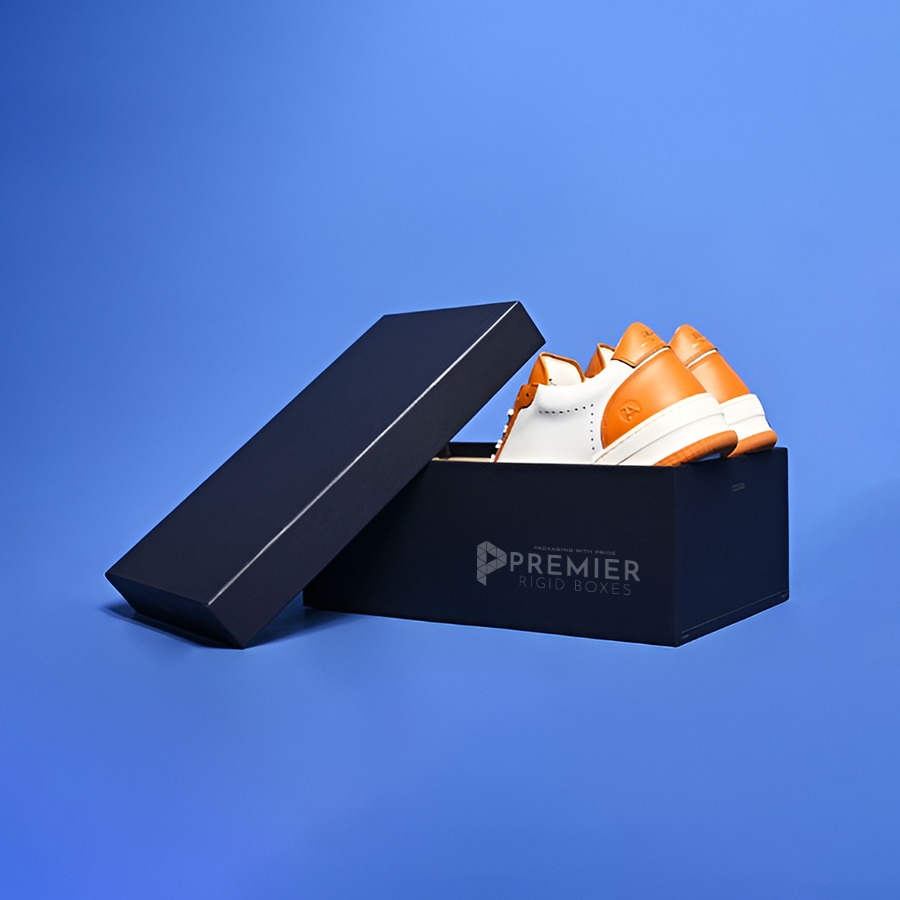
Once merely used for product transit, the humble shoebox has become a marketing tool that can protect the product, convey the brand’s image and inspire consumers to buy. Shoeboxes play an integral role in the customer experience for shoe brands, retailers and even online retailers. Whether you are a new brand looking to bring your first collection to market, or an existing brand searching for improved packaging, knowing what to look for in a cardboard shoebox is important. Here’s what you need to know about retail-ready, durable shoeboxes that make the sale.
The New Shoe Box is a Good Shoe Box
The worldwide footwear industry is worth over $400 billion a year. And in such a competitive market, quality packaging is essential. Your shoebox is often the first point of contact for your brand, particularly in e-commerce, where your shoes are shipped in a box.
Cheap, poorly printed packaging is cheap and low quality. A high-quality box signals quality. Customers notice. They remember. And they’re increasingly showcasing their unboxing experiences online. Thousands of sales can be driven by a popular unboxing video. A damaged, unattractive box can result in returns and poor reviews.
When shopping for cardboard shoe boxes with lids durable packaging solutions that enhance retail appeal, seek out boxes with reinforced corners, heavy paperboard, and printable surfaces, all of which make the simple shoebox into a powerful branding tool.
What Makes a Quality Cardboard Shoebox?
Not all shoeboxes are created equal. Commercial-grade boxes are a far cry from shipping cartons. Here’s what to consider when choosing one.
Paperboard Thickness and Weight
Shoe boxes are usually made of paperboard (also known as boxboard or chipboard), not corrugated cardboard. Paperboard is stiff, smooth and printable. It comes in points (thickness) or grams per square meter (GSM).
| Grade | Thickness | Best For |
| 16pt–18pt | Lightweight | Budget shoes, temporary storage |
| 20pt–24pt | Standard retail | Most athletic, casual, and dress shoes |
| 26pt–32pt | Premium/heavy-duty | Luxury footwear, boots, heavy shoes |
For most retail applications, 22pt or 24pt paperboard offers the best balance of durability and cost. Boxes below 18pt collapse under stacking pressure. Boxes above 28pt add significant weight and shipping cost.
Construction Style
The market is divided into three main styles of shoebox:
Tuck-top (one-piece): The lid and base are attached. A flap fits into a slit. Easy to make and cheap but not as stiff.
Two piece (lid and base): Lid fits over the base. Standard for retail. Offers great stiffness and display.
Magnetic lid: Two-part box with magnets in the lid. Premium feel. Higher cost. Ideal for luxury brands.
Reinforcements
Sturdy shoeboxes feature:
- Corner protectors: Reinforcements folded into all corners to stop them being crushed
- Reinforced side walls: Glued double paperboard on long side walls
- Plastic or metal rivets: Common in shipping boxes (not used much with retail boxes)
Art of Selling: Retail-friendly features
The strongest box is no good if it’s not attractive. Great shoeboxes come in both durable and attractive. Here’s what makes them successful.
Print Quality and Finish
Your box is a billboard. Printing at high resolution (300 DPI or more) makes logos, imagery and text sharp and clear. Available finishes include:
- Matte lamination: Matte, non-reflective. Resists fingerprints. Great for high-end and minimalist designs.
- Gloss lamination: High gloss, reflective. Makes colors pop. Shows scuffs easily.
- Soft-touch coating: Velvety texture. Premium feel. Higher cost.
- Spot UV: Raised shiny areas on matte background. Creates contrast and visual interest.
Color Accuracy
Many shoe brands are very specific about colors. Nike wants a “University Red” box. When buying shoeboxes, ask for a proof first. Screen proofs are seldom accurate.
Window Options
Some shoeboxes have a window to display the shoe. It’s more likely for display boxes (boxes that sit on the shelf) rather than shipping boxes. Window options include:
- Clear PET: Durable, transparent, recyclable but not compostable
- Compostable cellulose film: Environmentally-friendly, less clear
- Open window (no film): For boxes not to be shipped
Custom vs. Stock Boxes
Custom boxes are made to your exact specifications: dimensions, paperboard weight, printing, finish, and inserts. Minimum order quantities (MOQs) typically range from 500 to 10,000 units. Per-unit cost is higher at low volumes but drops significantly at scale (often $0.60–$2.00 per box depending on features).
Stock boxes are pre-manufactured in standard sizes. You add your own labels or stickers. MOQs are low (50–500 units). Per-unit cost is competitive ($0.30–$0.80). Best for startups, small runs, or secondary packaging.
Where to Buy
| Supplier Type | Best For | MOQ | Lead Time |
| Local box manufacturers | Custom boxes, small businesses | 500–1,000 | 2–4 weeks |
| Overseas manufacturers (China, India) | Large volumes, lowest cost | 5,000–10,000 | 6–12 weeks |
| Online packaging retailers | Stock boxes, immediate needs | 25–250 | 2–7 days |
| Wholesale packaging distributors | Mixed sizes, medium volumes | 500–2,000 | 1–3 weeks |
Cost Breakdown (Per Box, Approximate)
| Box Type | 500 units | 2,000 units | 10,000 units |
| Basic stock (no print) | $0.35 | $0.25 | $0.18 |
| Printed stock (1 color) | $0.55 | $0.40 | $0.28 |
| Custom size + 4-color print | $1.20 | $0.85 | $0.55 |
| Premium (magnets, soft-touch, inserts) | $2.50+ | $1.80+ | $1.20+ |
Eco-Friendly Options for Sustainable Brands
Sustainability is no longer niche it is expected. Eco-conscious shoppers actively seek brands that minimize environmental impact. Cardboard shoeboxes are inherently more sustainable than plastic alternatives, but further improvements are possible.
Recycled Content
Request boxes made from post-consumer recycled (PCR) paperboard. Percentages range from 30% to 100%. Higher PCR content may slightly reduce brightness and stiffness. For most brands, 60–80% PCR offers the best balance of sustainability and performance.
FSC Certification
Forest Stewardship Council (FSC) certification ensures paperboard comes from responsibly managed forests. FSC-certified boxes command a small premium (5–10%) but appeal strongly to eco-conscious customers.
Plastic Elimination
Traditional shoeboxes often include plastic elements: window film, handle inserts, or foam padding. Replace these with
Compostable cellulose film (for windows)
Cotton or paper handles (if handles are needed)
Molded pulp or paperboard (instead of foam)
Water-Based Inks
Conventional printing inks contain petroleum and volatile organic compounds (VOCs). Water-based or soy-based inks are non-toxic, easier to recycle, and produce comparable print quality.
Shelf Stacking and Display
Shoeboxes in retail stores are often stacked 3–6 boxes high. Test your box’s stacking strength. After 48 hours under weight, the bottom box should show no visible bowing or corner separation.
Recommended stacking height: 5 boxes maximum for standard 22pt boxes; 6–8 boxes for 26pt+ reinforced boxes
Stacking pattern: Alternate box orientation (rotate 90 degrees every other layer) to distribute pressure
Seasonal and Promotional Boxes
Many shoe brands release special packaging for holidays, collaborations, or limited editions. These boxes often feature:
- Unique colors or patterns
- Foil stamping (gold, silver, rose gold)
- Embossed or debossed logos
Custom interior printing (often a brand message or pattern visible when the lid opens)
For limited runs (500–2,000 boxes), digital printing is cost-effective. For larger promotional runs (5,000+), traditional offset printing offers better per-unit economics.
Protective Handling Features
Retail employees handle shoeboxes dozens of times before a sale. Design features that improve handling include:
- Rounded corners: Less likely to snag on shelving
- Pull tabs: Small half-circle cutouts on the lid sides for easy gripping
- Finger indentations: Shallow pressed recesses on box ends
- Anti-slip coating: A light texture on box bottoms to prevent sliding on shelves
- E-Commerce Specific Considerations
- Box-in-a-Box Shipping
Most e-commerce shoe sales ship the shoebox inside a larger corrugated shipping box. This protects the retail packaging. However, some brands ship the shoebox itself as the outer carton (known as “ready-to-ship” packaging).
Dimensional Weight (DIM Weight) Optimization
Shipping costs are calculated by dimensional weight (length × width × height divided by a DIM factor). Shoeboxes are naturally bulky. Reducing box dimensions by even 0.5 inches in each direction can save thousands annually at scale.
Example: A 13″ x 9″ x 5″ box has a DIM weight of approximately 4.5 lbs. Reducing to 12.5″ x 8.5″ x 4.5″ reduces DIM weight to 3.5 lbs. a 22% shipping cost reduction.
Unboxing Experience Design
E-commerce unboxing is a sensory event. Design your shoebox to maximize delight:
Opening resistance: The lid should slide off smoothly but not fall off. Too tight = frustration. Too loose = cheap feeling.
Interior reveal: When the lid lifts, the customer should see your logo or a brand message printed inside the lid.
First glimpse: Shoes should be visible immediately, wrapped in tissue paper that unfolds easily.
Smell: Use low-VOC inks and glues. Chemical smells ruin the experience.
Mistakes to Avoid When Purchasing Shoeboxes
Mistake #1
Cheaper isn’t necessarily cheaper. Damages lead to returns, re-ships and reviews. A single shoe return costs more than the cost savings on a box of shoes.
Mistake #2
Cardboard absorbs moisture. Under humid conditions or when transported in changing climates, uncoated paperboard can distort, become soggy or grow mold. If you’re shipping overseas or in humid climates, ask for moisture-resistant treatment or wax impregnation.
Mistake #3
Too big and shoes will slide and scuff. A box that is too small crushes the shoes. Test the boxes before mass production. Use real shoes and the tissue paper and inserts, too.
Mistake #4
If your shoebox is the shipping box, it should include:
- Return address
- Shipping barcode
- Any required warnings or labels
If the shoebox is being shipped in a larger box, they can be left off the shoebox.
How to Order: Step-by-Step
Step 1: Determine Your Requirements
Shoes types and sizes (measure shoes, not last sizes)
- Annual volume (units per year)
- Retail vs. e-commerce primary use
- Budget per box
- Sustainability goals
- Design elements (logos, colors, artwork)
Step 2: Request Samples
Contact 3–5 suppliers. Ask them for sample shoeboxes. Assess the weight, quality and finish of the paperboard.
Step 3: Build a Mockup
Design the shoe box digitally, but before finalizing it, make a physical mockup of the shoe box. Test:
- Can you insert the shoe with tissue paper?
- Does the lid fit all the way down?
- Does the store clerk open and close it without breaking?
Step 4: Design and Prepress
Use a packaging designer (not a web or print designer). Packaging designers know about bleed, registration, die lines and substrate. Ask for an actual print proof (not a PDF) before going into production.
Step 5: Place Your Order
Confirm all specifications in writing:
- Size (inside and out)
- Paperboard weight and type
- Colors (Pantone or CMYK)
- Finish (matte, gloss, soft-touch)
- Quantity and per-unit price
- Lead time and FOB (free on board) or delivered
- Payment terms
Step 6: Check on Arrival
Upon receipt of your goods, check a sample (usually 5-10 boxes from different cartons). Check for:
- Right size (use a ruler)
- Color (match your proof)
- Print alignment and clarity
- Adhesion (no flaps)
- Stacking (5 boxes stacked, 24 hours)
Final Thoughts
You might have the most beautiful and comfortable shoes. But if they’re delivered in a ugly and damaged box, that’s what they remember. Consumers associate your brand with the product packaging. If your shoebox is well-made, it says a lot about the quality and attention you pay to detail.
Use quality paperboard. Use finishes that complement your brand. Do test runs before going full scale. And don’t forget: both in store and online, the box is the first sale.
Frequently Asked Questions
Q: Can shoeboxes be recycled?
Yes. Most cardboard shoeboxes without plastic windows and metallic inks are curbside recyclable. Be sure to remove any plastic liners.
Q: Can I recycle or reuse shoeboxes?
Yes, if the box is in good condition. When the box is opened, the paperboard is slightly crushed. To ship them back, try a new box or a corrugated box.