
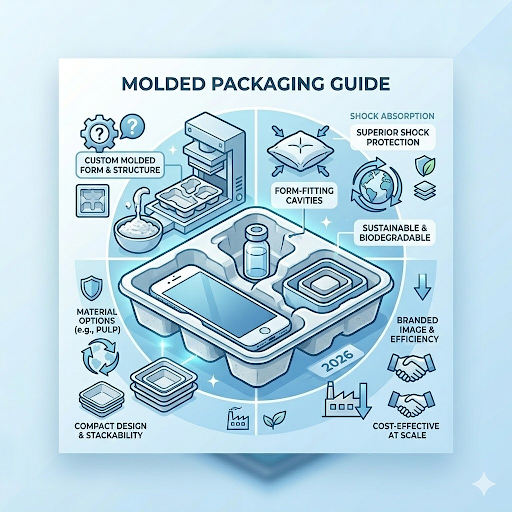
Molded packaging is becoming one of the most reliable and eco-friendly packaging solutions used by modern industries. From electronics and cosmetics to food and fragile items, many companies prefer molded packaging because it provides protection, sustainability, and cost efficiency. This packaging is designed by shaping materials into specific molds that perfectly fit the product.
As businesses focus more on safe transportation and environmentally friendly packaging, molded solutions are gaining popularity. Understanding the molded packaging definition and its advantages can help brands choose better packaging for their products. In this article, we will explore what molded packaging is, how it works, and the most important molded packaging benefits for businesses and consumers.
Molded Packaging Definition
The molded packaging definition refers to a packaging method where materials such as paper pulp, plastic, or biodegradable fibers are shaped into molds to create protective packaging forms. These molds are designed according to the size and shape of a product so that it fits during storage securely during storage and transportation.
This type of packaging is widely used for items that require extra protection. The molded shape prevents movement inside the package, which reduces the risk of damage.
Common Materials Used in Molded Packaging.
Different industries use various materials to create molded packaging depending on the product requirements.
- Molded pulp made from recycled paper
- Biodegradable plant fibers
- Thermoformed plastic
- Foam-based molded materials
These materials allow manufacturers to produce packaging that is lightweight, protective, and environmentally friendly.
How Molded Packaging Works
The process of creating molded packaging involves shaping raw materials into a specific design using molds. First, the material is prepared and placed into a mold that represents the final shape of the packaging. Heat or pressure is applied so the material forms perfectly around the mold.
Once the material takes the desired shape, it is dried or cooled to maintain its structure. The final product is a strong packaging insert or container designed to hold the product safely.
Many industries use molded packaging inserts inside boxes to hold fragile items such as electronics, glass products, and medical equipment. The molded design keeps the product stable during shipping and reduces the chance of breakage.
Molded Packaging Benefits
Businesses prefer molded packaging because it provide several advantages compared to traditional packaging materials.
Better Product Protection
One of the biggest molded packaging benefits is improved product protection. Since the packaging is designed specifically for a product’s shape, it holds the item securely in place. This reduces movement during transportation and protects fragile items from impact or pressure.
Eco-Friendly Packaging Solution
Another important benefit is sustainability. Many molded packaging products are made from recycled paper pulp or biodegradable materials. These materials reduce waste and help companies move toward environmentally responsible packaging practices.
Light but Strong
Despite being lightweight, molded packaging offers excellent strength. The molded structure distributes pressure evenly, which helps prevent damage to the product. Lightweight packaging also lowers shipping costs for businesses.
Cost-Effective for Businesses
Companies often choose molded packaging because it can reduce overall packaging costs. Once the mold is created, manufacturers can produce large quantities quickly and efficiently. This makes it an and flexible solution for businesses that ship products regularly.
Industries That Use Molded Packaging
Many industries rely on molded packaging to protect their products during storage and transportation.
- Electronics companies use molded packaging inserts to protect devices like laptops, headphones, and cameras. The molded design prevents the items from shifting inside the box.
- The food and beverage industry also uses molded pulp trays for eggs, fruits, and takeaway packaging. These trays provide protection while also being environmentally friendly.
- Cosmetics brands use molded packaging to hold glass bottles and delicate containers. This ensures the product reaches customers without damage.
- Healthcare companies use molded packaging for medical equipment and instruments that require safe handling and protection.
Because of its flexibility and reliability, molded packaging is used in a wide range of industries around the world.
Future of Molded Packaging
The demand for molded packaging is expected to grow as businesses look for sustainable and protective packaging options. Many companies are investing in biodegradable molded materials to reduce their environmental impact.
New technologies are also improving the production process, making it faster and more efficient. Manufacturers now able to create highly customized molds that perfectly match product designs.
As environmental concerns continue to increase, molded pulp packaging is likely to replace many plastic packaging materials. This shift will help businesses meet sustainability goals while still providing safe product protection.
Conclusion
Molded packaging has become a modern packaging solution that combines protection, sustainability, and cost efficiency. Understanding the molded packaging definition helps businesses see how this packaging method works and why it is widely used across different industries. The key molded packaging benefits include better product safety, eco-friendly materials, lightweight structure, and lower shipping costs. As companies continue to focus on sustainable packaging solutions, molded packaging will play an even bigger role in the future of product packaging and shipping.